
Sayonara, Nihon
Concluding the Japan series, with answers and gratitude
Goodbye, Japan. If these fourteen posts have had anything to prove, it’s that it was a wild ride, stuffed to the gills with new experiences, and I can only hope I’ve captured enough of it in my posts, and my photos, and my keepsakes, that I can recall a hint of what it felt like, in places large and small, in moments grand and mundane.
Technically, this post is 10 months overdue. On 4 April, 2024, I boarded my flight from Tokyo back home to the US, and have re-rooted my life here since then. But now is as good a time as any to conclude the Japan posts, reflect on my journey overall, and try to answer those initial questions I had with a more complete tourist’s perspective, looking back from a full year after my trip was in full swing. (Regrettably, I probably would have had much more clarity on this had I written it sooner, but life happens, and I’ll do what I can from here.)
Let’s begin the end.
Answers to My Questions
In my very first blog post, I listed all of the things I was wondering, hoping, and fearing about what my experience would bring. I’ll quote the questions here, and answer them best I can. My perspective as an American tourist without any real language/cultural education and only 3 months of exposure is still severely limited, so take it all with some salt, and preface every answer with “As far as I could tell…”.
From Past to Present
The typical idea that tourists use to nutshell all of Japan is “old meets new”: World-class and fully-advanced cities, dotted with ancient shrines. Some of the most cutting-edge tech companies started on the same island where simple ramen shops and spa houses have run for centuries. So I have some questions based around that idea:
How did it get this way? How is it different from Europe’s cities-and-cathedrals version of old-meets-new?
Japan is an old place, with cultural customs that have luckily survived for millennia. This is not unique; there are plenty of places on Earth like this, all with mixtures of old-meets-new—I’m especially thinking of some cities in Europe and the Middle East. The newness in Japan feels a lot newer than those places, however, which makes the contrast really stand out—and that can mostly be attributed to the tech explosion from Japan’s postwar economic boom. This is also one major part of the difference in vibe between Japan and Europe. The other major part is that cathedrals are made of stone which stands unchanged for centuries, while Japanese temples are made of wood and rebuilt several times, either out of necessity or ritual.
How pervasive/active really is the old stuff in modern everyday life for a typical Japanese resident? Do they usually patronize ancient businesses?
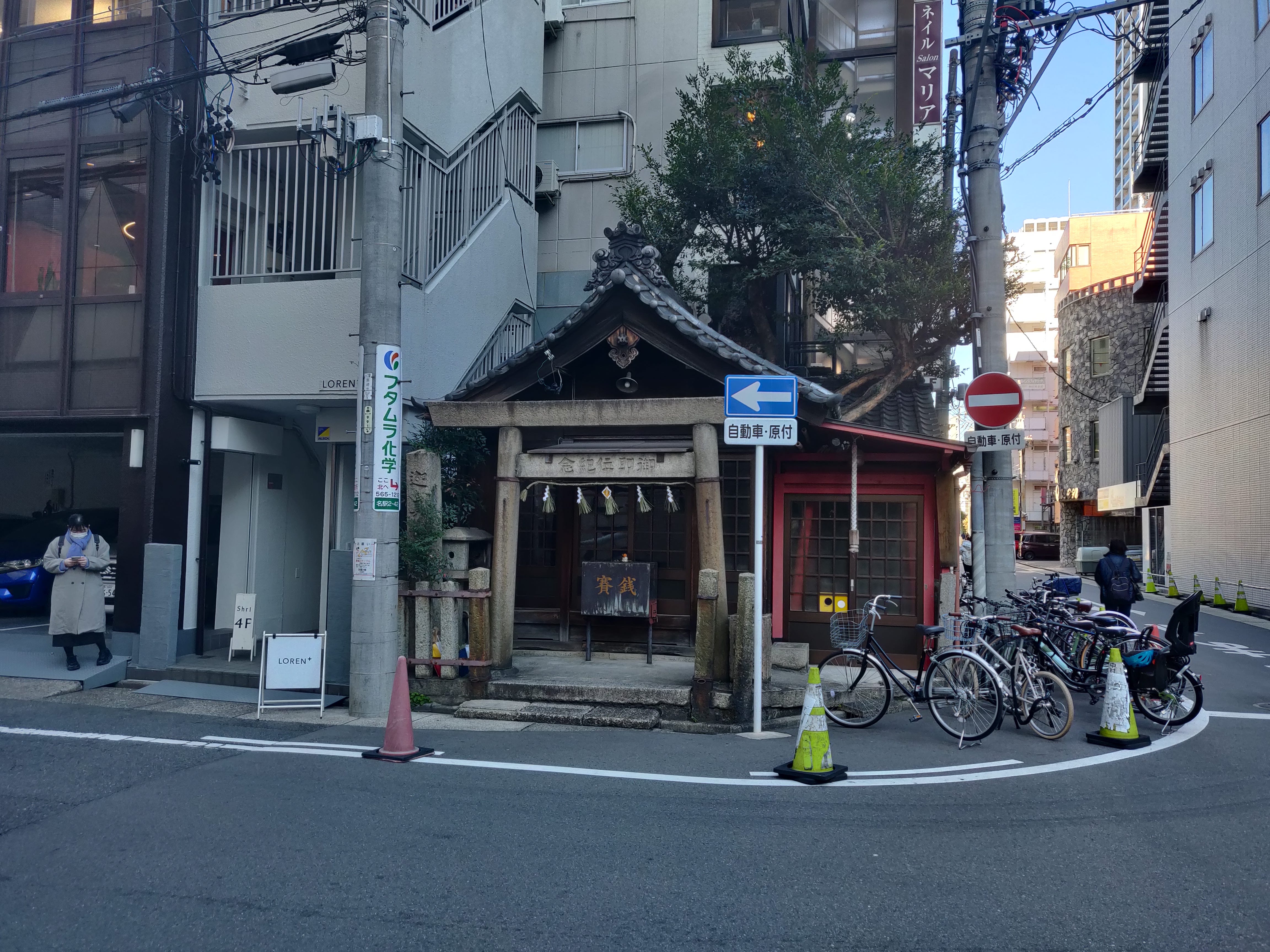
In short, not really, no. I wasn’t checking the founding date of every building I walked into, but the oldest businesses around tend to only be postwar old, not centuries old. The most ancient thing that survives to see regular use are certainly the temples and shrines that are everywhere, but as we discussed in Ise Jingu, there’s a Ship of Theseus problem to consider when the shrines have been rebuilt or even relocated several times over in their history.
Does older tend to be better? What are unexpected ways they differ? (eg. ancient ramen shop vs. brand-new ramen shop)
Not really answerable, given my previous answer. But also not really a problem, thanks to the overwhelming number of choices of business for food and goods.
What is the common thread, if any, between the persistence of ancient structures (like old shrines and businesses) and the persistence of any ancient norms/practices in society? Are there strong paradigms of cultural preservation in general? Where did they come from?
Once again thinking back to Ise Jingu and the Power of the Replica that is present in all reconstructed Japanese monuments. The common thread between persistent ancient structures and ancient practices, and the reason they have stuck around for this long, comes down to one word: iteration. The ancient structures persist because the ancient practices of their construction still exist, and such practices exist out of necessity to create the next iteration. You will not forget how to build a traditional temple when you keep rebuilding it the same way decade after decade—and the same goes for annual festivals, weekly rituals, or daily habits. The culture is preserved simply because it’s repeated. For a great example of this closer to home, consider for how long people have been going to church services on Sundays, or celebrating your favorite religious holiday at the same time each year.
The Gaijin Experience
The word for a foreigner in Japan is gaijin (外人, literally “outside person / outsider”). It’s usually a neutral term, but can carry pejorative weight depending on the context. The gaijin experience in Japan will be a unique one, so I’m curious:
The tall language barrier is sure to affect my everyday life, probably more as a nuisance when I want to communicate, but also as a curiosity in itself:
How often will the language barrier “get in the way” when by myself? Will I end up changing my routes/plans at all simply due to what I can read? How so?
It didn’t really get in the way at all for practical needs, thanks to translation software, and a little help from some basic phrases I learned to say offhand. It did slow things down dramatically when trying to socialize with Japanese speakers, enough to really stilt the vibes, but we smiled through it and enjoyed ourselves nonetheless. I can’t recall a conscious redirection of plans from readability, but I’ll bet stuff like that did quietly affect my decision making when choosing, say, a place to eat dinner or a store to walk into. In fact, I can think of one time when my original plans were saved thanks to knowing katakana: we were lost on the way to our dinner reservation and almost missed it. The restaurant’s name was on our phones in English, but not on the entrance, and if I hadn’t noticed that the name it displayed in katakana was the same, we may have walked right past it. If you do visit Japan, take this story as a recommendation to learn to read katakana. As the alphabet that English loanwords and titles are spelled with, learning it is a relatively easy first step to opening the Japanese world to you, and you’ll see a lot more legible signage.


How will I typically converse with new people? What’s the best translator app / digital assistant for doing so?
I didn’t speak with many Japanese people that weren’t service workers, and the service workers usually had enough experience with tourists to speak basic English. When this wasn’t the case, I defaulted to Google Translate, more out of convenience than anything. and used ChatGPT if I really wanted a second opinion. In one case at a bank, they had their own handheld speech-to-translated-text device, which was neat.
I am starting to learn basic Japanese, as of ~2 weeks ago. I currently know basic sentence structure, a few words, and I can slowly read hiragana and katakana. How much better will I get at speaking/hearing Japanese? Where will I learn it from? Will I learn much kanji?
I got faster at reading hiragana and katakana because it was everywhere, and I enjoyed the challenge that each new sign presented—especially katakana, where it’s usually an English loanword, like bus (バス, basu), hotel (ホテル, hoteru), or beer (ビール, biru). I got a little better at speaking Japanese, in that I learned a few key sentences/phrases I’d say repeatedly (“What is that?”, “Is there a bathroom?", “Where are the English books?”, etc), which I learned just by repeatedly typing them into Google Translate. I couldn’t really understand Japanese audibly beyond a few words and polite phrases, picked up via repeat exposure. Same with the very few kanji I learned, which included the numbers 1-4 (一, 二, 三, 四), large and small (大, 小), mountain (山), river (川), and yen (円).
How will I be seen/treated as a gaijin…
…by my (native) coworkers?
They were used to having foreign Workaway guests helping, and were very friendly and put in effort to socialize either with limited English or translator apps.
…by strangers walking around?
Mostly ignored. Occasionally glanced at in more rural areas, treated like a tourist (rightfully) by touts and solicitors in busier areas.
…by service workers?
Politely given service, often via basic English, but even when not, the experience wasn’t unpleasant. If I recall correct, a couple places would have signs in front explaining they didn’t want non-Japanese speakers entering, so I didn’t, simple as—but they were very rare.
…when trying to make friends?
All of the friends I made were other tourists that spoke English, or native Japanese people very familiar/friendly with tourists already, so kinda a moot point.
Will I find/befriend other English speakers and/or gaijin? Where will I find them? What will we do?
Yes! My coworkers were my first and closest friends, as we spent lots of quality time and overcame the challenges of work together. After that, I made plenty of other more temporary friends in the hostel-mates I stayed with, and they were all very interesting and cool to talk to and explore with. In one instance, my friend and I met and chatted with another American and a German in a store, and we decided on a whim to all go out for the night. The social spontaneity of international travel was overall a very fun and unexpected aspect of my trip.
The People and the Work
I will be staying in Japan as part of a work-exchange program called Workaway. I highly recommend it if you want to travel and absorb a new culture for cheap! It also means I will be, well, working, and my enjoyment of this work will impact my trip whether I want it to or not. The other giant uncontrollable factor is the people: my host, my coworkers, my fellow Workawayers, my roommates, my customers, and whoever else I happen to bump into–and their personalities will also affect things:
How much work will there be? Will it be harder/easier than expected? What will the typical workday look like?
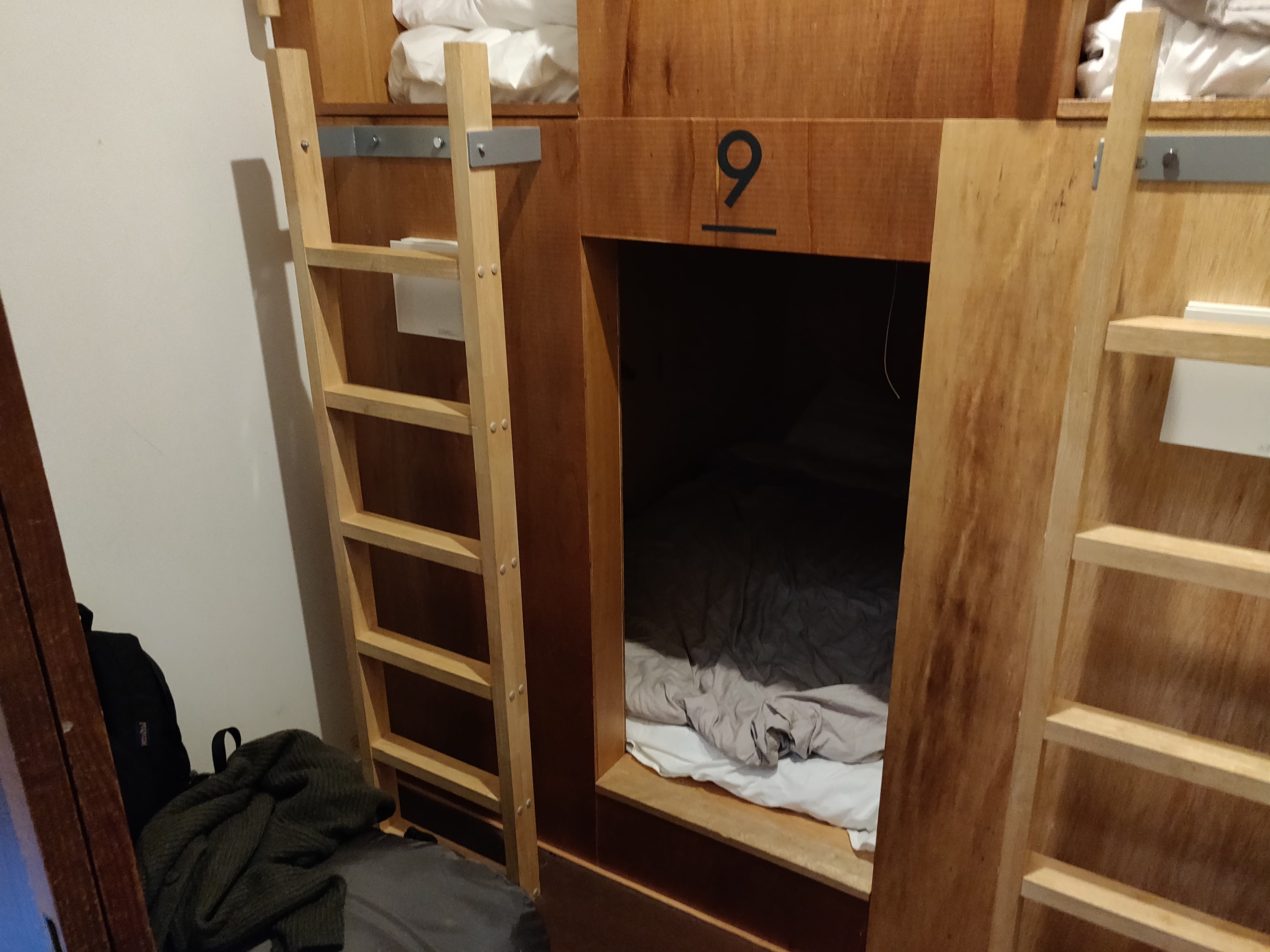
A typical workday at the hostel involved making up all beds for guests that were checking in or out, which was a lot on weekends, and cleaning all bathrooms and common spaces, maximum 5 hours a day. Not too bad overall, really—but there was one unexpected hurdle that did make the work harder than expected at times: Most beds were box beds surrounded by wooden walls, and half of them were top bunks up a ladder. As discussed in the First Impressions post, my knees and I were woefully unprepared for the amount of climbing and crawling that was required, and ended up specializing in the non-bunk beds and bathroom cleaning, which I could more easily handle.
Will the non-work chores (laundry, grocery shopping, etc) go smoothly?
Yes, no faults there. Coin-op laundry was available everywhere I stayed, and if the grocery store down the street lacked something I wanted, there was another one a couple blocks away at most. Hygeine was also simple, but interestingly, there’s basically no stick deodorant in Japan (they don’t have as much body odor to deal with, allegedly), so I had to suffice with a roll-on liquid variety for the time being, and even that was not trivial to find.
Who will I become closest with? Who will I try to avoid?
Will I make any close friends? Will I go on any dates?
My three fellow Workawayers were by far the closest friends I made. We really bonded and learned so much from each other, and helped each other plenty with work tasks. I still message them from time to time, and see them continuing their world travels on social media.
I didn’t really avoid anyone per se. A couple hostelmates snored like woodchippers later in my trip, but there was nothing I could do but put in earplugs. I guess I was a little nervous around my Workaway boss and the native coworkers who ran things, but they were all still polite and friendly. And I didn’t go on any dates; I barely do that to begin with, and I was focused much more on just exploring and socializing.
Wherever You Go, There You Are
I have only ever really known what it’s like to live life as a native-born American citizen, in my own cultural bubble. Breaking out of this bubble will answer a lot of questions I have about myself and my preferences:
What internal beliefs / norms of mine will be challenged by Japanese / non-American culture?
“Challenges” like this don’t appear in direct forms, like being called out or rejected by someone native. They feel like soft pressures to fit in, just by walking around and feeling the normal human need to belong by doing as the proverbial Romans do. I felt this once while walking down a street in Nagoya, when I noticed it was totally clean except for one piece of litter. In an American city, where litter is the norm, there’s pretty much no obligation for pedestrians to clean any of it up. But this was Japan, the single wrapper stood out, and I felt the urge to do my part, be a good tourist, and maintain the norm of cleanliness, so I took it with me to the next trash can I could find. (And as I mentioned in First Impressions, they’re rare, but I learned that the trick of using the nearest konbini’s trash cans was reliable enough.) My sense of American ‘to each their own’ individualism comes and goes, but on that day I couldn’t argue with the results of Japanese ‘do your part’ civic duty.
I also learned some other norms from my fellow Workawayer friends from Germany and France. For one, we had a debate one night about throwing away unwanted food that lasted a while (they were flabbergasted that I’d tossed the remainder of a sushi roll that I didn’t want). I don’t think this difference was from our home countries, since American kids are still told about starving kids in Africa when they don’t finish their dinner, but it was interesting how ardently they’d adopted the mindset compared to me. I think I convinced them that occasional food waste was not the end of the world, while they convinced me to consider saving food for later more often.
While not a challenge per se, I also learned two interesting German lifestyle norms which I enjoyed:
Lüften (lit. “air”), the practice of opening the windows for at least a few minutes every day to air out the place. It keeps the air fresh and ventilated, and yes, you’re expected to do it regardless of the weather outside.
Spazieren (lit. “stroll”), or more descriptively Verdauungsspaziergang, the practice of taking a walk after a meal. It helps metabolism and digestion, and it’s a good excuse for a nice walk.
And the opposite: What beliefs will be enforced/amplified by Japanese culture?
The biggest beliefs in this group were based in the infrastructure. I’d already not liked the car-centric suburban and exurban planning that America is rife with. To see a world where it didn’t exist—one where instead, trains were ubiquitous and reliable enough to not need a car, and a place where mixed-use zoning was common enough that there was never far to travel between home and my destination—rekindled my feelings. They say that urbanists are radicalized by either Tokyo or Amsterdam, and I now see half of why.
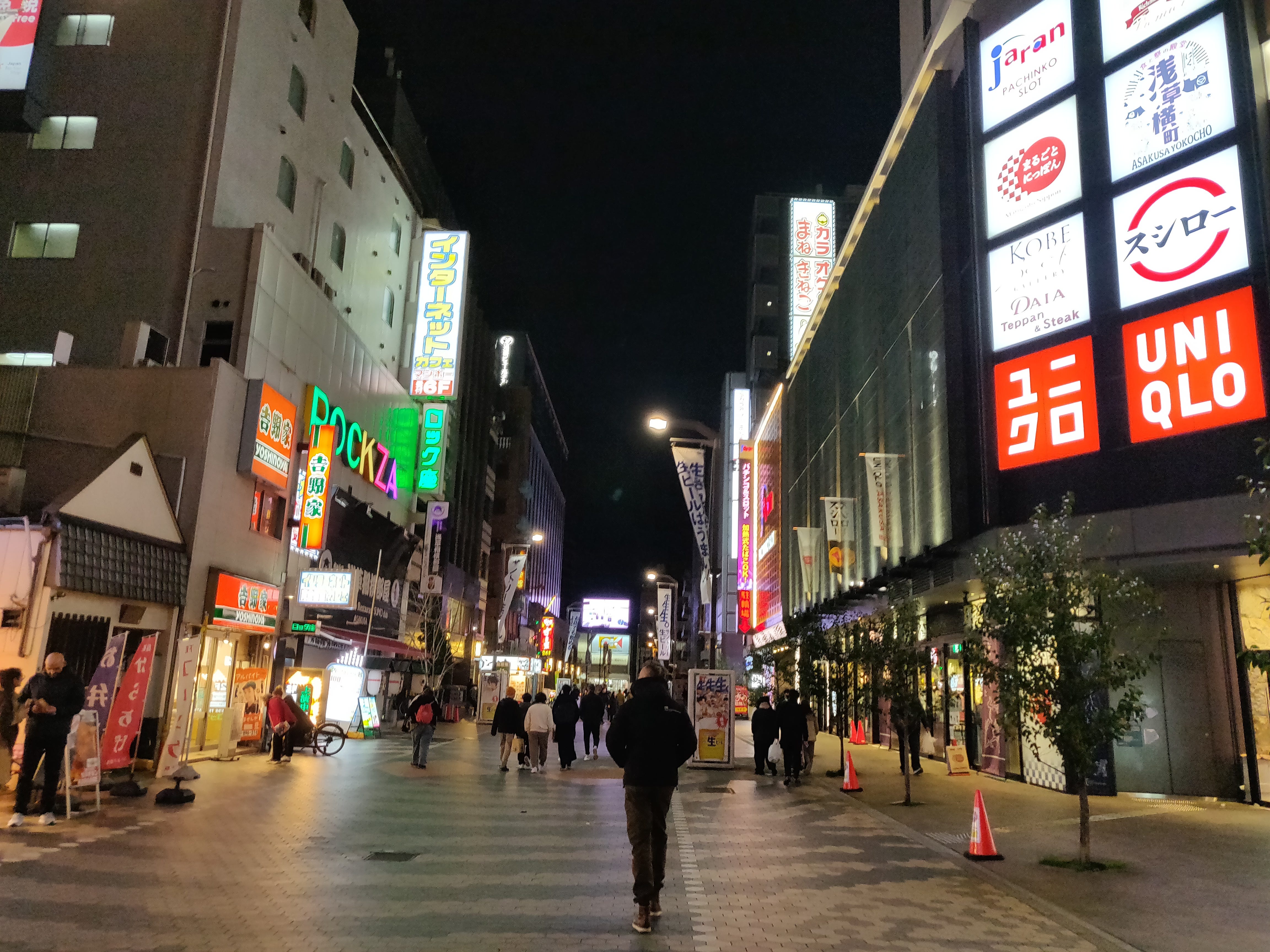
And, though less about Japan specifically, my travels reminded me how nice most people are. Sometimes, enough doomscrolling or cable news can make you feel like the world is full of monsters. But given the chance, nine out of ten total strangers are still willing to share some words and a smile, at the very least.
How will my typical internal monologue and thought sequences change, if at all?
Also less about Japan specifically—but when in travel-mode, my focus is turned more outward, to see and experience what I can of my new environment each day. At home, I’m much less active and experience-hungry, and empirically prefer to relax in my apartment, which usually leads to more introspection and brooding. Several factors contribute to this difference, but there’s an important lesson here about the mental benefits of activity and exploration. What they say about idle hands is just as true about idle feet.
What else will I discover about how I behave in new environments and situations?
I wasn’t quite sure how I would behave when faced with an obstacle all by myself, like when I ran out of cash that one time, or when I got lost on the way to see Mt Fuji. And as it turns out, I tend to default to asking those around me for help when I find the opportunity, and using the kindness of others to get by. Luckily, Japan was a friendly place full of friendly tourists and service workers, but I may want to beef up my self-reliance if I travel somewhere that’s less keen on politeness than Japan (ie everywhere else on Earth).
And for all of the above: How will I use what I’ve learned to change my behavior when I return?
I think the lessons here are clear: Stay exploratory, move my feet, don’t be afraid to talk to strangers, save leftovers, take some responsibility for my environment and community, and remember to luften every so often.
The Fun Stuff
I saved the most obvious category for last: All of the “How do they do ___ in Japan” questions. What even is Japanese culture? What parts of it stand out as unique/different-from-mine? This will be my guiding light to try every new experience I can find, or at least learn about them:
FOOD! Ramen, sushi, donburi, sake, miso, real wasabi! At every level from konbini sandwiches to Michelin-star omakase meals!
The food I ate in Japan really deserves its own entire post. But in short, I lived on konbini onigiri breakfasts, thought the fancy omakases were fantastic but less of a bang-for-your-buck, and my favorite meals overall were generally from the hole-in-the-wall ramen shops and the conveyor sushi chains. I suppose it’s basic to rank sushi and ramen on top, but sometimes things are popular for a good reason.


POPULAR MEDIA! Music, film, premium TV, trash TV, theater, books!
The music that I overheard, bought in stores, and heard at live shows also deserves its own post. A nutshell of that is:
Pop music moves really fast in Japan, ie you’ll hear stuff only from last month playing in the local grocery store, not from last decade like in the US.
City pop is excellent, full of good vibes and incredible instrumental talent.
The live music scene thrives in cities thanks to all the tiny venues around, and the shows are great loud fun.


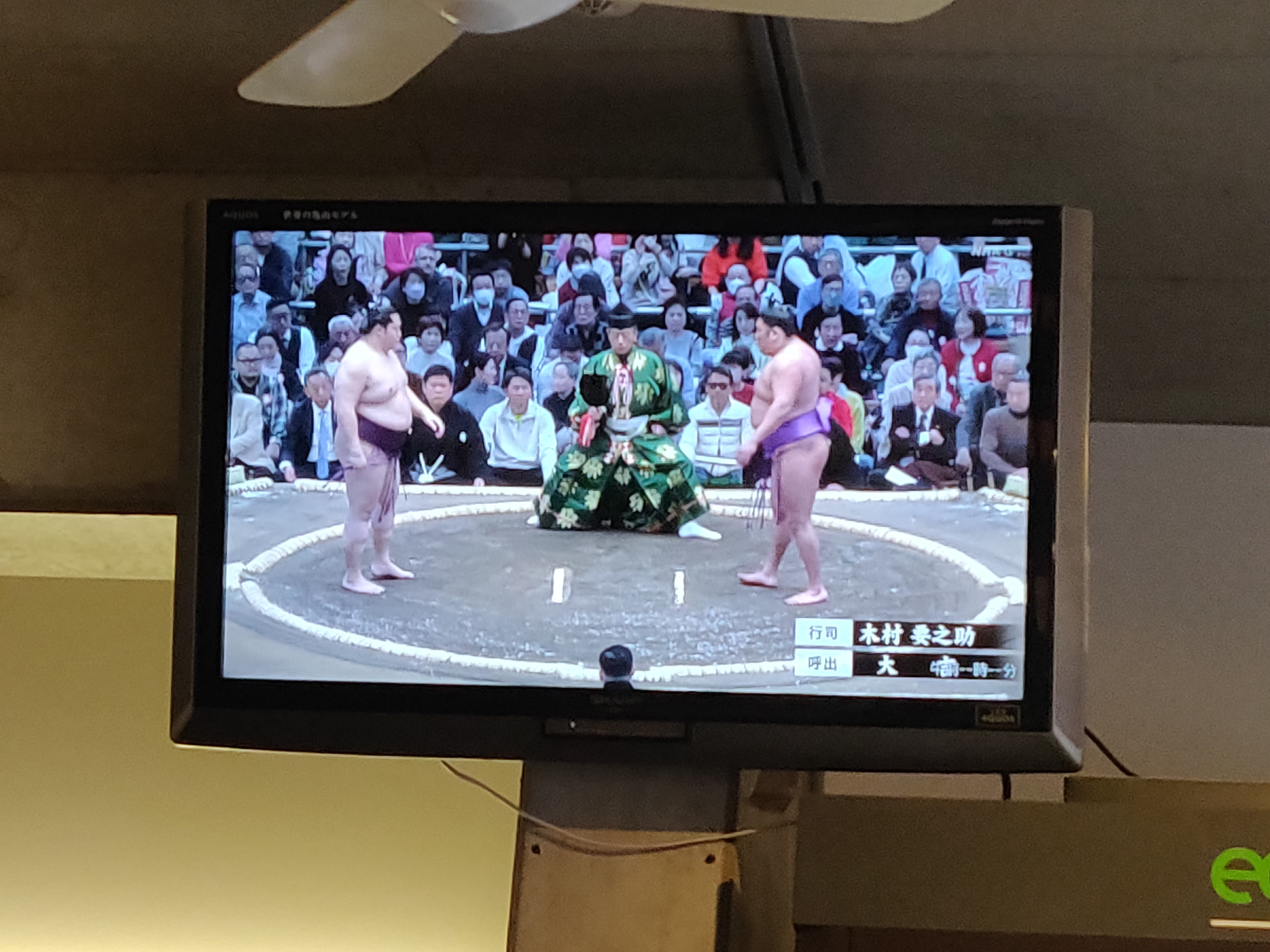
Visual media is much more character-focused that I saw, especially anime. My one Japanese film experience was pretty great, and I watched several Ghibli movies on my laptop with my Workaway friends if that counts. I didn’t watch much TV except two occasions: once when a hostel guest was watching a crime drama, which felt exactly like a campy American daytime cable show, and again when a Sumo tournament was on. I was interested in kabuki theater as well, but didn’t get a chance to attend a show.
Holidays and local cultural festivals!
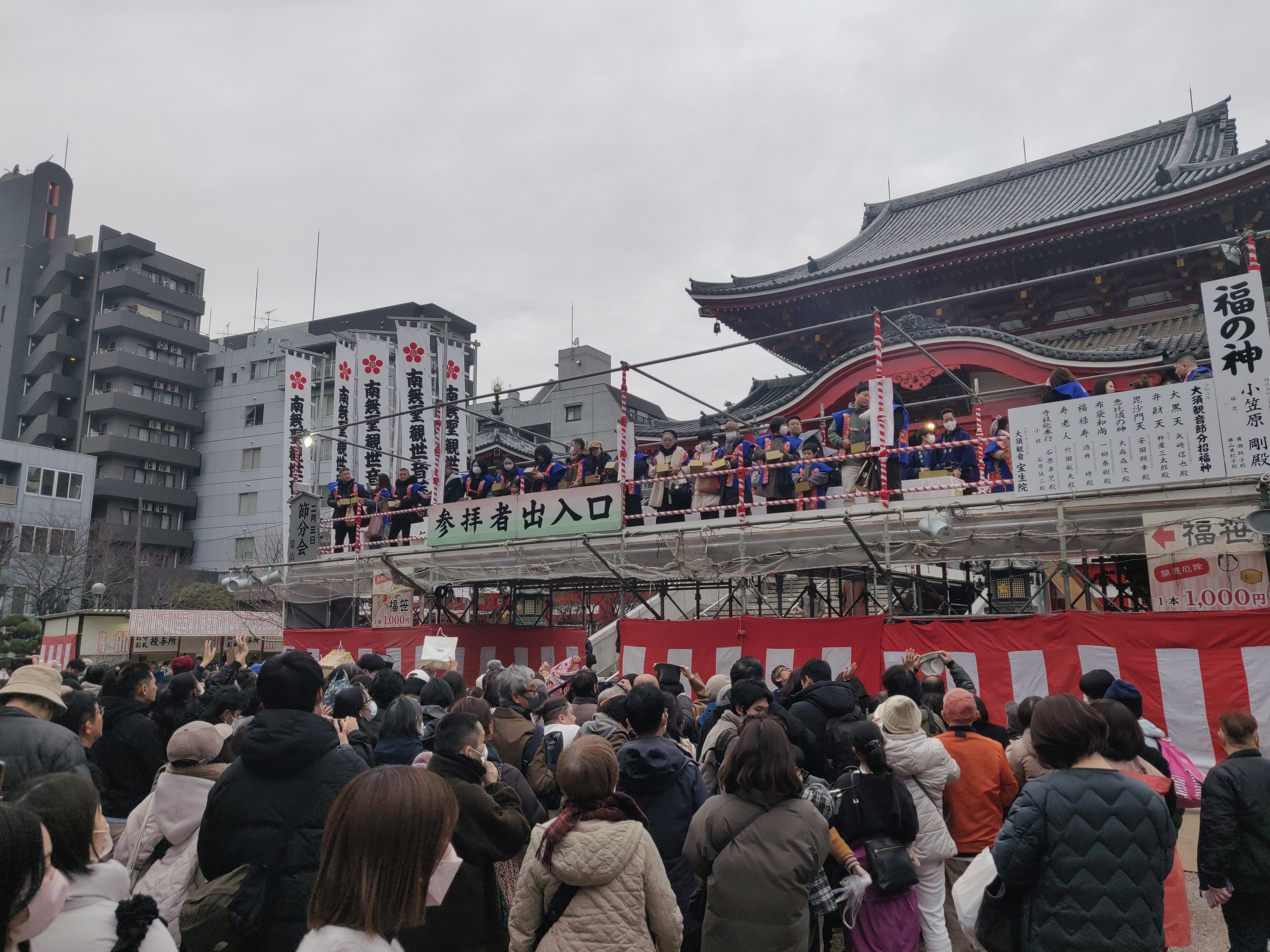
I did manage to experience a couple of these! The first was Setsubun, a holiday marking the beginning of Spring (in the old calendar, celebrated somewhere around 2-4 February), which is celebrated by throwing roasted soybeans to drive away evil spirits and welcome good fortune in. A year ago today at time of writing, I got to see a bean-throwing ceremony at the Osu Kannon temple in Nagoya, where patrons cast beans out at a crowd, many of whom were holding up open bags to catch the beans. The second festival was a truer-to-life start to spring: the Ueno Sakura Festival, a modern local event celebrating the blooming of the cherry blossoms.
Colloquialisms and manners! Slang, idioms, jokes, taboo words/phrases!
I thought bowing was more of a formal first-greeting-only type of thing, but it turns out it’s more ubiquitous than that. I pretty quickly learned to bow to pretty much everyone, even a half-bow as a ‘thanks’ gesture when crossing the street instead of the american hand-raise. I also learned to not hand my card directly to a shop clerk, and to use the little tray instead. As far as colloquialisms, ie common expressions with more than their literal meaning, I only learned a few—mainly the four used for leaving/returning home. The only slang I came across was in Kyoto, where they’ll sometimes say okini (おおきに) as ‘thanks’ instead of arigatou.
One interesting interaction happened outside a shop involving gestures. There was a woman in front, smiling to people and presumably asking them inside. I walked up to her and she made the “shoo / go away” gesture, hand facing down, fingers moving back and forth. But she continued smiling. After a moment of confusion, she welcomed me in. Turns out, this is actually the “come here” gesture in Japan, opposite to the American one with palm facing up.
Fashion! Casual, fancy, seasonal, sleepwear, accessories!
I am not into the fashion subculture like others are, so a deep dive into latest streetwear trends you will not find here. But I did notice a few notable outfits, including:
The many salarymen who seemed to get the same exact style of black suit with black tie and white business shirt, some neater, some more disheveled,
The young schoolkids out on walks/field trips who wore overall uniforms and brightly colored hats, and the older schoolkids who wore naval-looking uniforms,
The uncommon dolled-out kawaii girl in neon hair, stockings, boots, and accessories to the max,
A couple of cosplay meetups, where men and women dressed as their favorite distinct characters (regardless of the character’s gender).
Politics! Current party lines/beliefs, movements, protests!
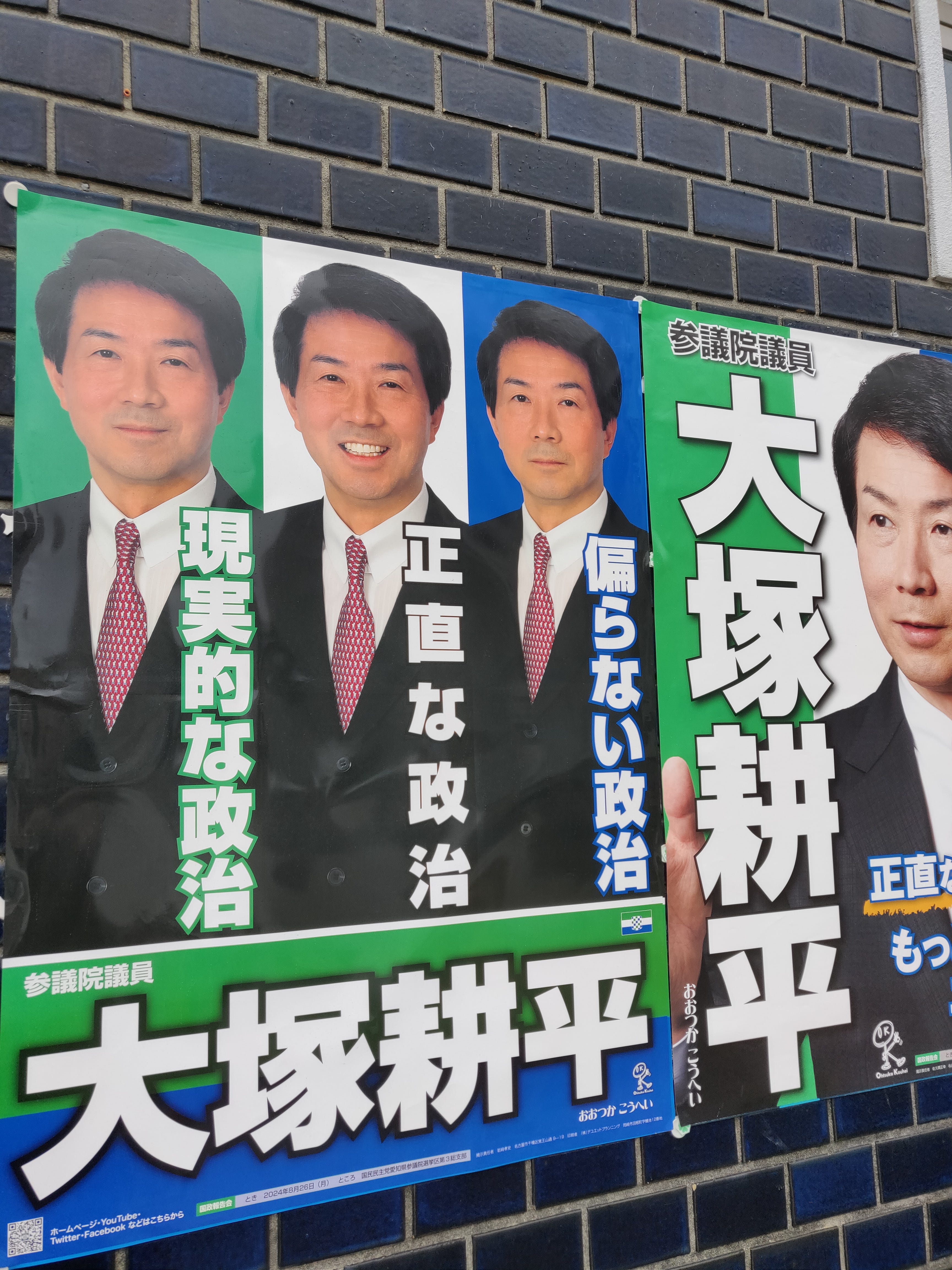
I didn’t look for this much either. But two times I did notice something about local politics were 1) when this poster caught my eye for resembling a meme:
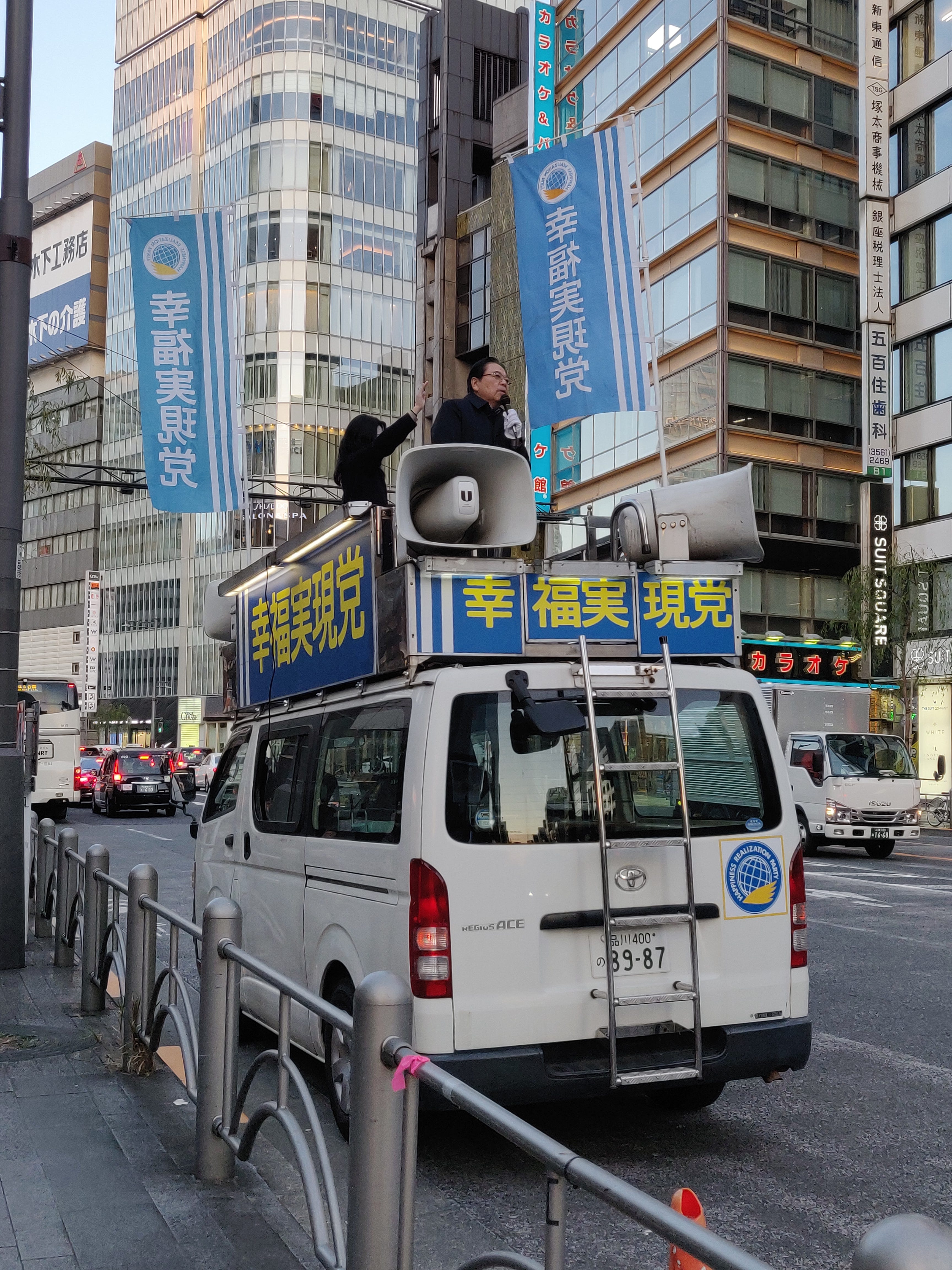
And a time when the announcers on this truck were saying something in Japanese, and they gave me a pamphlet about something related to Taiwan. Cursory research then showed that they were a far-right party with culty vibes, which I should have figured from their name being the Happiness Realization Party.
Relationships! Family bonds, ancestors, friends, flirting/dating norms!
I don’t think I got any info on this one, except that the Japanese staff at my Workaway hostel seemed friendly with each other and would do stuff together on occasion.
and of course, American stuff! McDonald’s, KFC, etc, what American media/customs are popular!
In terms of food chains: McD’s, KFC, Starbucks were huge, only a couple Wendy’s, no Burger King. A surprising amount of Denny’s. 7-Eleven might count, but its Japan inventory, and relative amount of locations, are different enough to make Japan’s 7-Elevens their own thing. In terms of media: As covered in my Characters post, classic American animal characters like Snoopy and Tom & Jerry have a surprisingly strong foothold.


So that’s everything I was curious about before the trip. Naturally, plenty happened that I didn’t expect at the time—there are always unknowns—and I covered what I could of those across the entire Japan series.
End Credits
I’m so thankful that this could happen; that years of desire gave way to weeks of preparation, culminating in a golden opportunity once I had the time and werewithal to make it a reality. Tao-san, the hostel owner who offered me this opportunity, deserves utmost thanks.
I’m also deeply thankful to the people I met along the way, most of whom were very nice and made great companions for the short time we crossed paths:
Alessandra, a talkative hostel guest from Italy
Hans and his friends, hostel guests from Korea who were into photography
Zach and Luca, an American and a German who my friend and I spent a night out with on a whim
Suzanna and Friso, a Dutch couple who happily chatted with us at a bar
Olga, a Spanish woman and Japan resident, and her Japanese friends Akane and Sakura—thanks to my friend speaking Spanish as well, talking to Akane and Sakura was possible through a trilingual telephone game
Alex, who enjoyed meditation, and Rob, who packed parachutes for a living, both hostelmates from near my home state
Laura and Annie, hostelmates from Canada who accompanied me for delicious pancakes and the capybara cafe in Tokyo
Mikio, an older hostel regular who gladly shared his wisdom on Japan and loved asking guests about their lives and travels
Ben, Deklin, Joel, and Chris, a fun group of Australian guys that partied hard
Laura and Hinako, hostel workers in Miyajima who were mutual friends and coworkers with my Workaway friend Vanessa
Francisco, an American with a serious grindset (and whose stock tips I should have heeded), with whom I went to Golden Gai
Mateo and Patrick, from my home city (!), who I bumped into getting kebab
Ruwen, a nerdy German guy who brought me to the JoJo’s Bizarre Adventure-themed bar in Tokyo
Nick, an American internet acquaintance who happened to be around and invited me to a rock concert
Ryan, a guy from Toronto who joined me on my trip to the movies
Kahlil, who I barely spoke to, but who generously gave me some yen when I was running low
Brendan, Mason, and John, hostelmates with whom I shared my black eggs and who convinced me to come clubbing in Shinjuku one night
A HUGE thanks to the closer friends, the ones I spent extra time with, who were so friendly and fun and kind, who truly made the trip special:
Saki, Yune, Kari, and Akira, the Japanese staff at my Workaway hostel who were so kind and patient with all of us as we learned the work, so fun to hang out with at dinner (and karaoke), and so nice to talk to even across the language barrier
Shige, the sweetest old woman in the world, who showered us Workawayers with gifts and took us out to dinner for her birthday, and with whom I shared a nice walk in a park in greater Tokyo
Yanni, a woman from Canada who always had fascinating things to say at each of the meals we shared together, including my final meal before the flight home
And best for last, a MEGA-HUGE thanks to the people who truly made the trip what it was, who joined me for weeks on end and without whom the adventure would not have been so amazing:
Ari, my great friend of many years, who was luckily able to join me for a few weeks and enhanced the adventure enormously—anytime I just say “my friend”, he is the friend. He was with me for Arashiyama, the Ryokan, some parts of Tokyo, and many more great experiences I didn’t capture in these posts. (He also has his own blog, check it out here!)
My Workaway friends, Maya, Mina, and Vanessa. Things started off slow at first, but before long we bonded tightly over the work and the many fun group outings. By the end of our shared time we really felt like a family unit. I’ll never forget our conversations, learning each other’s cultures and personal tics, and all the quality time we shared, from exploring Japan outside to movie nights on the couch inside.
Thank you all so much!! みなさん どうもありがとうございました !!
Final Words
In the last week or so of my trip, with money stretched thin, checklist of things to do pretty much complete, and my inevitable return to America looming, I fell into a simple routine of laying low, eating cheap konbini fare, and buying last-minute gifts and omiyage for my friends and family. In that time, I truly felt the most like a Japan citizen vs. a tourist, with a newfound sense of mundanity in my days. In this state, with the end on my mind, I wrote some final reflections.
Being at the end feels, normal. Mundane.
Like I'm just a guy who lives here now.
Maybe it's because I'm now inured to all of the day-to-day minutiae of life here.
Maybe it's because I'm mentally checked out after being here so long.
Maybe I'm preparing myself for being home by getting back into my old home-body routines. Reading, scrolling, watching YouTube or whatever.
Or maybe I'm in those routines because they don't cost money, and I'm running pretty low.
Right now I'm on my way to my last interesting activities, but I procrastinated for quite a while, just doing nothing of interest. Is this how I prevent myself from going home?
Maybe I'm feeling down about it all because I'm just hungry? (One of my plans is dinner.)
I'm afraid I'm going to forget everything I loved about this place.
Luckily I've been doing a decent job archiving it all. But still, there's bound to be cracks.
I wonder how much I've already forgotten about from the early days, from January, from Nagoya.
I hope I remember everything that I enjoyed and could meaningfully take back with me.
The principles, the lifestyle. Politeness, etiquette, civic duty to public spaces. Doing the absolute most with what little you have. The embracing of imperfection, and fantastical escapism, in tandem.
I look around now and wish I could take it all back with me. That I could stuff all of Tokyo into my luggage. Just to keep the possibility open.
The old saying is true, you don't know till it's gone. I know now more than ever what I miss about home, about America, about my hometown.
And in a couple months, I'll probably know a lot better what I'll miss the most about Japan.
I'm afraid of how I'll react once it finally hits me. That I'm back, that I'm not returning for quite some time if ever, and that now the whole experience is only as real as the memories it left behind.
Like a long dream...
...
...
..
.
.
.
.
Hey, I have an idea. Let's write a note to my future self.
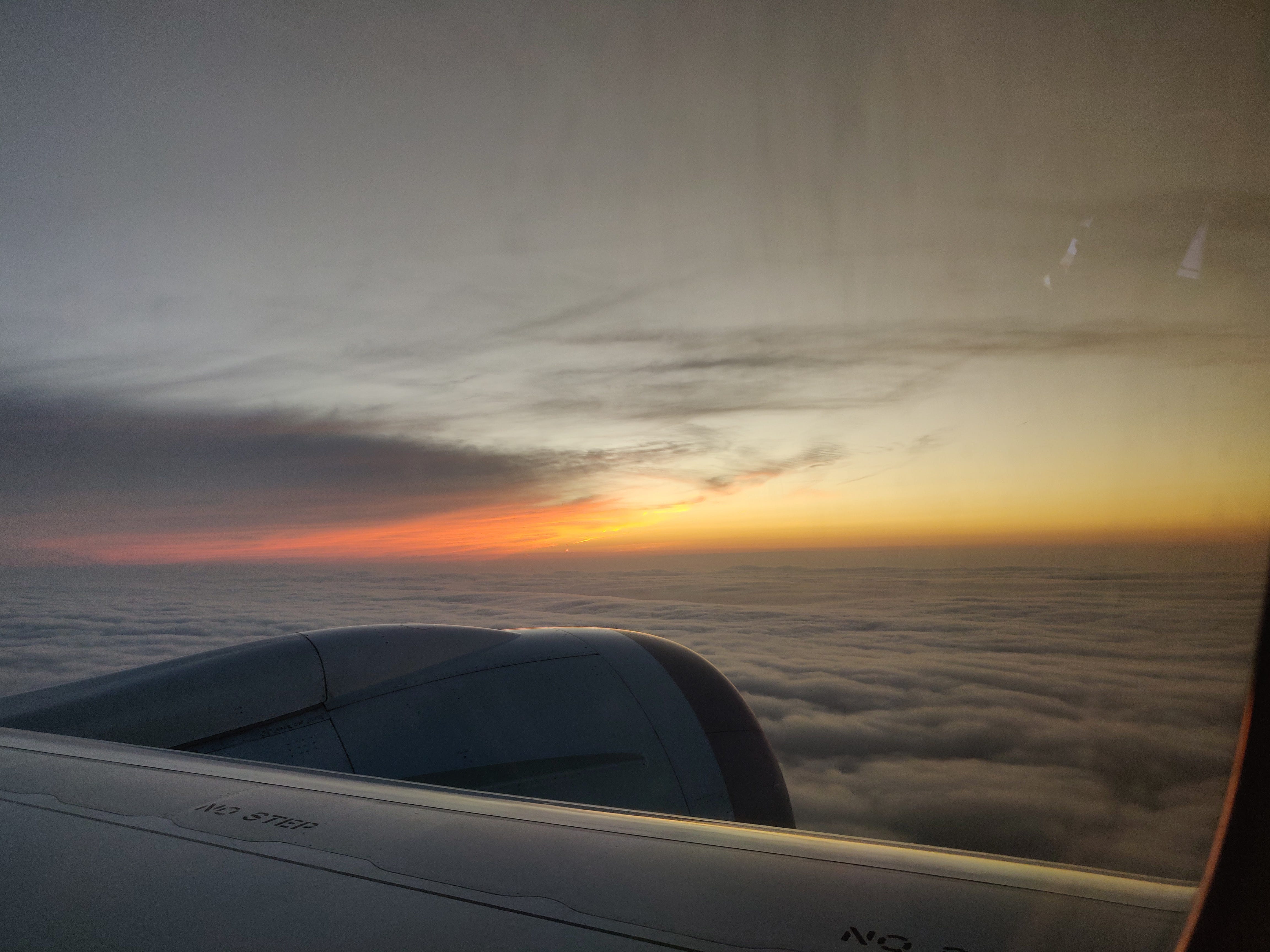
And a day later, on the flight home, I did just that.
Dear future self, it's me again.
I'm on a plane, somewhere over the Pacific. Returning to America. Returning home.
You remember Japan of course. Probably a little less than I do. Thankfully I got you covered as much as I could, with photos galore, and the scrapbook, and the blog. I hope it captures something of what this trip was to me, and what it is to you.
Did you get a job? Where at? I know we were desperate, but I hope it's not too far out of the way. I hope your apartment is nice. I hope you made it nice. I'll bet the rent feels like bullshit to pay. It probably is. But I hope you're comfortable.
In fact, I hope you're bored. Because boredom means you're stable, means you're comfortable. I hope you're in a grounded routine. Making decent money, so the monthly payments don't eat away at you too much.
Hopefully you're not too bored though! That routine includes time with friends I hope! Hopefully there's a game store nearby we can visit, or an open mic night or something.
If you are actually reading this, you might be looking for some kind of solace that life right now isn't giving you. Maybe you're down on your luck and want to remember a better time.
Well, this time was great--but I think now that it's over, in a way, it can only get better! We've learned so much here about what we enjoy--not just about Japan, but about places and people in general. And places and people are everywhere.
Many people were decent, single serving friends, who honestly weren't very interesting. Some of them had a neat quirk or two. Some were good examples of what not to spend your focus on. A few were kind enough to truly be good companions, who will be fondly remembered.
But overall, from all of these people, I enjoyed my own company the most. That is to say, we are so unique! Our perspective, our way of talking, our awareness of ourselves and the world around us--it truly seems rare. You should feel glad about that, I think. It means you're very special.
These people enjoyed your company too! They saw the special person that you were. They weren't just friendly for the sake of it! They laughed at your jokes. They took your advice.
You're a great person to be around. And if I were you, I would endeavor to be around more people--until you find that rare circle that you also feel grateful to be a part of. If you've found them already, great! If not, looking for them can be pretty fun in itself.
We both know how easy it can be to forget that. To sit, to wallow, for no real reason. It's okay if you don't have the energy. But remember that we're unfortunately at the whim of inertia--the bed has a gravitational pull. Get out of it if you need to. Take a walk. Two laps around the block. Find a neat tree, or maybe a bird.
Then come home, and take a shower. Sing in the shower. Clean the misery out of your pores--cause frankly it has an unpleasant odor.
Whatever stage you're at in the settling-in, I hope the next step comes easy, and isn't too expensive.
Maybe I'll add more to this later; I'm kinda tired. You know that airplane daze…
Reading this again almost a full year later, I’m amazed how much foresight it had, and how deeply reassuring it is. Thanks, past me! Thanks for everything.
What Next?
It’s going to be a while before I take any more grand international trips. But not to worry! I have other things I am excited to write about and share with you all: A fascinating book I recently finished, some insights on life and work, my favorite media as of late, and more. Here’s to even more adventures in 2025!